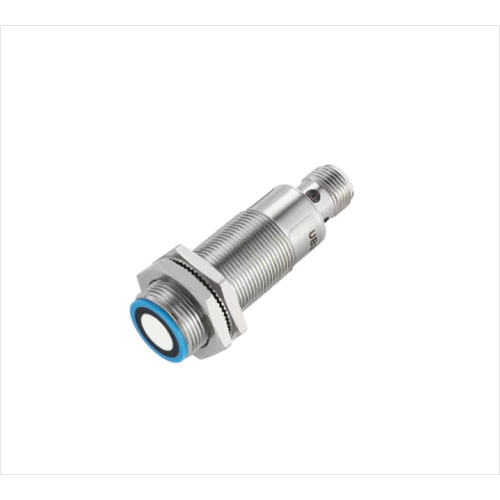
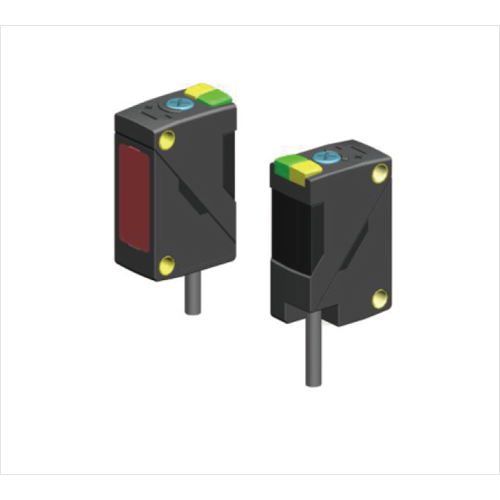
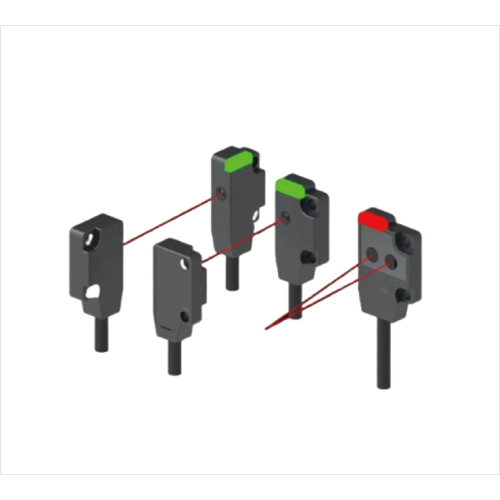
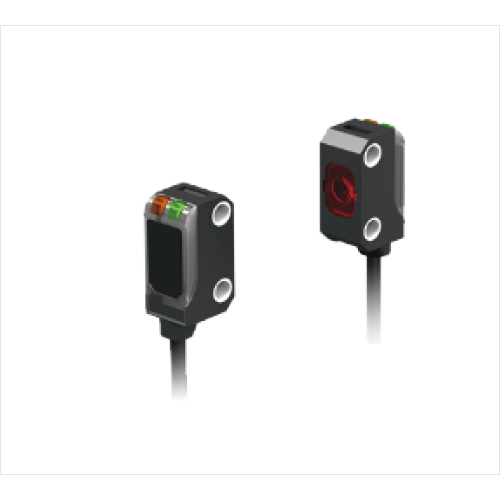
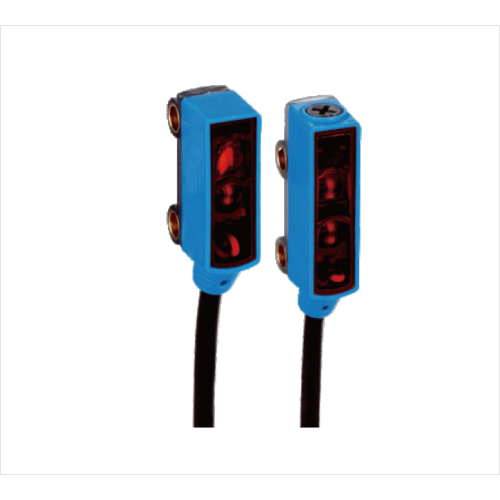
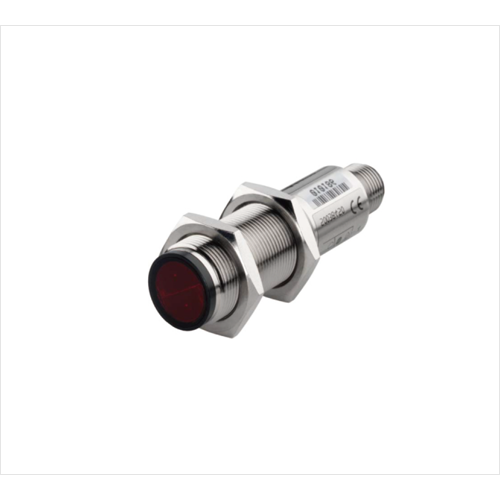
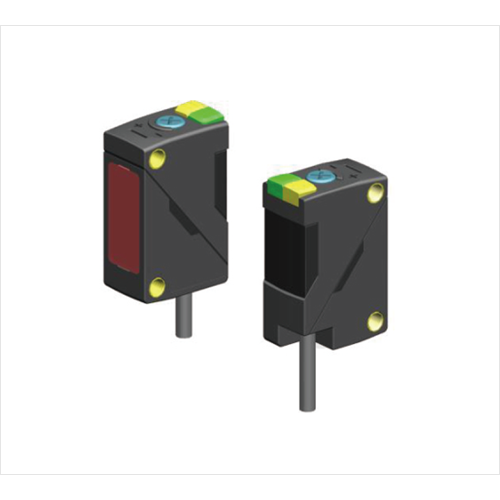
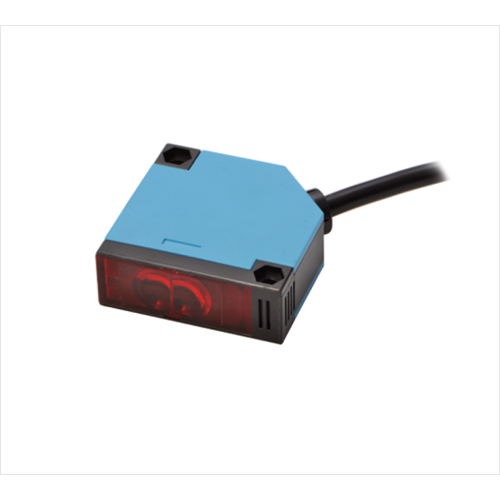
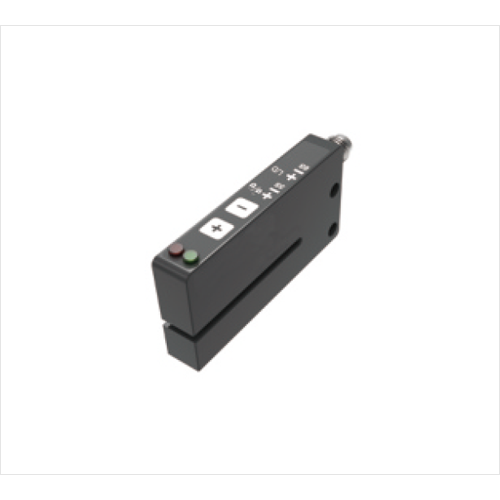
On high-speed filling lines, glass bottles and PET bottles are both transparent and reflective , and the liquid level inside the bottle also has strong reflective properties. Traditional diffuse reflection photoelectric switches are often difficult to distinguish between 'the bottle itself' and 'conveyor belts, brackets and other backgrounds', which can easily lead to misjudgment.
The emergence of background suppression photoelectric switch (BGS, Background Suppression) has completely solved this problem: it only focuses on target objects within a specific distance and automatically ignores background interference, even if the target is a 'almost invisible' transparent bottle.
1. Why is it necessary to use background suppression sensors?
Pain points of traditional sensors
Light penetrates the transparent bottle and cannot form stable reflections
The curved surface of the bottle causes the reflection angle to be uncontrollable
The background (conveyor belt, metal bracket) is confused with the bottle signal
The results are often: missed detection, false triggering, repeated alarms。
BGS core strengths
Based on the principle of triangulation , accurately determine the distance of reflected light
Preset effective detection interval, background is actively suppressed
Unaffected by object color, transparency, and reflective degree
2. Core application one: transparent bottle in place detection
Working principle
1. The emitter emits a focused beam of light
2. The receiving end uses PSD or CMOS array to receive reflected light
3. Only when the reflected light falls within the set distance window , the signal is output
Anti-transparent interference mechanism
Even though most of the light passes through the bottle
The front or curved surface of the bottle will still produce enough reflection to be recognized
The background (conveyor belt, bracket) is "shielded" by the algorithm
Actual income
Ensures filling head only activates when bottle is accurately positioned
Avoid air spray, spillage and equipment contamination
Improve the stability of the whole line rhythm
3. Key Application 2: Accurate liquid level detection (100% online full inspection)
This is a high-value application of BGS sensors in high-end filling lines .
Installation method
The sensor is installed in the conveying section after filling
The beam focus is precisely aligned with the standard liquid level.
Detection logic
Liquid level status | light behavior | sensor output |
Liquid level is normal | Light is reflected by the liquid surface at a set distance | OK |
lack of irrigation | Light travels through the air to the background | NG |
Overfill | The reflection point exceeds the set distance range | NG |
Core logic: It's not 'Is there light?', but 'Where does the light come from?'。
Actual income
Realize liquid level detection of each bottle of product
Automatically reject unqualified products
Ensure batch consistency and reduce the risk of customer complaints
4. The unique advantages of BGS sensors in filling lines
Advantages | illustrate |
Not affected by background | Changes in conveyor belt color and material do not affect the test results |
High-precision positioning | The detection window can be accurate to the millimeter or even sub-millimeter level |
Anti-transparent/reflective | Glass, PET, aluminum foil, etc. are no longer blind spots |
High speed response | Adapt to high-speed lines and steadily follow the beat |
5. Summary
In a high-speed, complex filling environment: transparency is no longer 'invisible', but an object that can be accurately measured.
Background suppression photoelectric switches, relying on the essential advantage of distance discrimination rather than brightness discrimination , are becoming:
✅ The preferred solution for in-place inspection of transparent containers
✅ Key technologies for full online liquid level inspection
✅ An important tool to improve production line yield and automation level
Make the "invisible" bottle clear and controllable.
If you need, I can help you further:
Change to product brochure style
Compressed into PPT speech key points
Supplementary selection parameters and installation precautions
Add comparative analysis with other sensor solutions