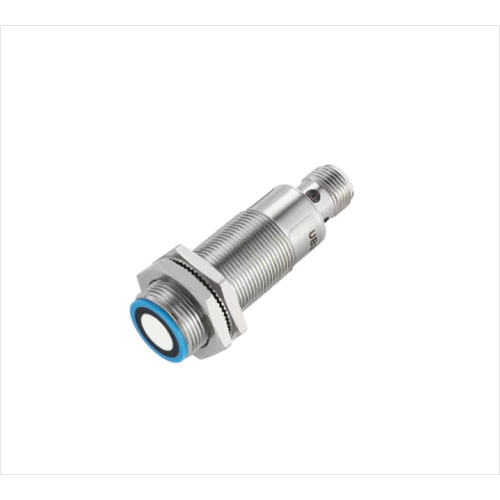
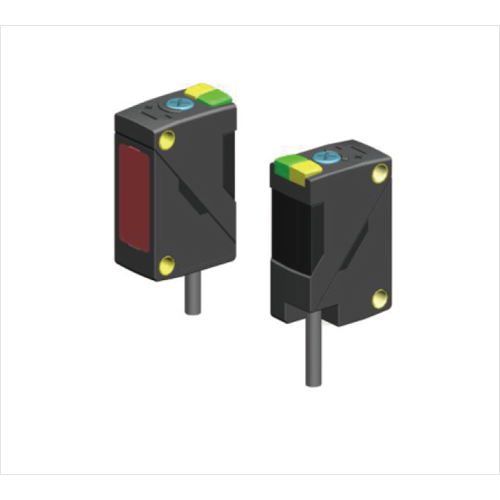
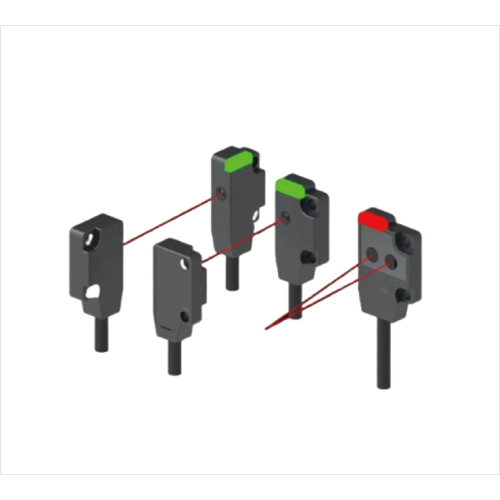
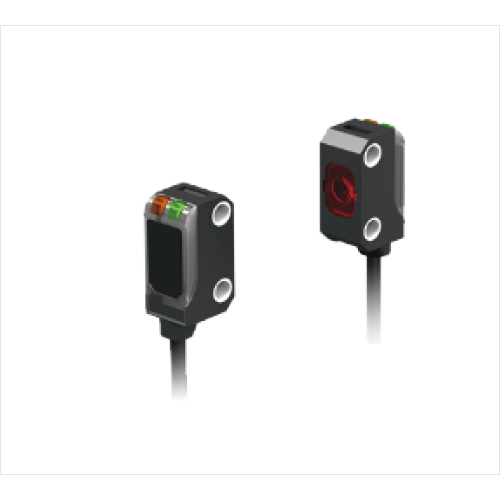
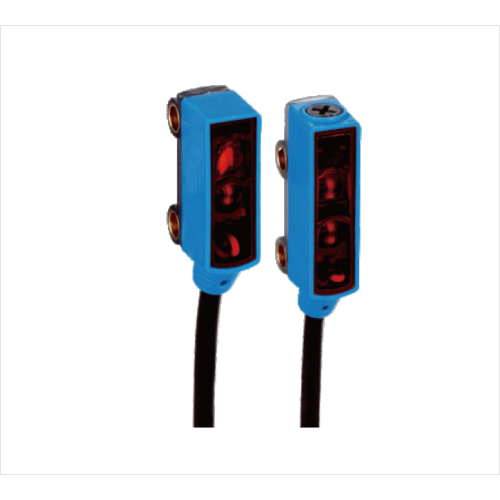
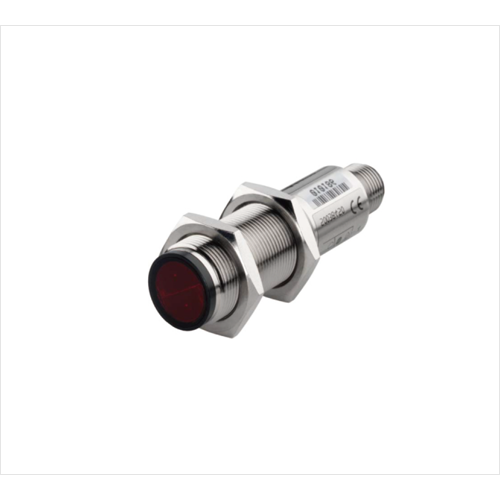
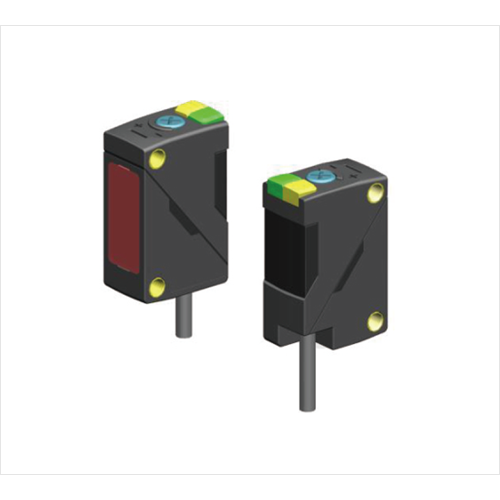
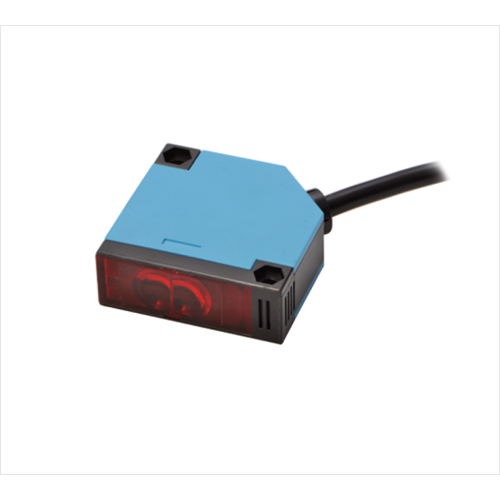
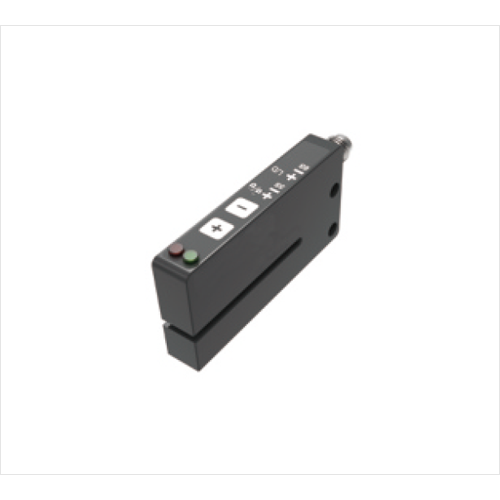
Safety grating: the "invisible guardian" of automated production lines
Amid the roar of high-risk equipment such as stamping, shearing, and welding, how do workers' hands balance between efficient production and safe operations? The answer is often hidden in the two opposing beams of red light around the equipment - it is the 'last line of defense' in the field of industrial safety: Safety Light Curtain (Safety Light Curtain)。
Safety grating, also known as safety light curtain, forms a protective barrier through a set of infrared beams. Once a human body or object breaks in, the equipment will stop in milliseconds. Today, we will systematically sort out its core application scenarios and "pitfall avoidance guide" in use.
1. Core application scenarios of safety gratings
The application of safety gratings is essentially to delineate an insurmountable electronic red line for "danger areas".
1. Stamping and forging equipment (the most classic scene)
On punch machines, hydraulic presses, and bending machines, workers need to frequently feed and pick up parts. Safety gratings are installed on the sides of the slider and workbench to form a vertical protection surface.
lFunction : When a worker's hand or body mistakenly enters the mold closing area, the grating immediately interrupts the output signal and forces the equipment to shut down to prevent hand pressing accidents.
2. Automated assembly and testing line
At robot workstations and automatic assembly machines, the high-speed movement of robotic arms carries extremely high kinetic energy risks.
lFunction : Construction personnel enter the restricted area. When maintenance personnel or operators accidentally step into the working radius of the robot, the light barrier triggers the safety loop to slow down or stop the robot to prevent collision injuries.
3. Logistics sorting and packaging machinery
Near high-speed conveyor belts, palletizers, and winding machines, the risk of clothing and hair getting caught in rollers is extremely high.
lFunction : Installed at the entrance and exit to detect whether there are personnel extending their limbs into the operating area to ensure that material flow and personnel safety do not interfere with each other.
4. Rubber, plastic and paper machinery
The risk of entanglement of large rolls and cutting blades is extremely high.
l Function : Cooperate with safety relay or safety PLC to realize the dual logic of 'two-hand start + grating protection' to ensure that it can only operate when the grating protection zone is unobstructed.
2. "Three disciplines and eight points of attention" when using safety gratings
Safety gratings are functional safety products . Improper installation and use will not only fail to save lives, but may also cause malfunctions and damage the equipment. The following are precautions that must be strictly followed:
1. Selection stage: check in
lSafety level (SIL/PL level) : selected based on risk assessment. Ordinary machinery must reach at least PLC (ISO 13849-1) , and high-risk equipment such as stamping usually requires PLe . Be sure to check the product’s CE certification and TÜV safety certificate.
lResolution (referring to the distance) : determines which part of the human body can be detected.
¡ 14mm/20mm: For detecting fingers or palms (hand protection).
¡ 40mm/80mm: used to detect arms or human torso (body protection).
lProtection height : It must be greater than the opening height of the dangerous area to prevent people from bending down or crossing over to enter.
2. Installation phase: stabilization and calibration
lRigid installation : The transmitter and receiver must be installed on a solid and immovable bracket. If the bracket shakes, it will cause the optical axis to shift, causing frequent false alarms.
lSafe distance (minimum distance) : This is the most error-prone place. The grating cannot be installed close to the danger zone. According to the international standard ISO 13855 , sufficient 'braking distance' must be reserved.
l Anti-vibration and anti-collision : On equipment with strong impact or vibration (such as large punch presses), anti-vibration pads or protective baffles must be installed to prevent the optical axis from being misaligned due to vibration of the grating.
3. Debugging and maintenance stage: regular "physical examination"
lLight calibration : After first installation or movement, alignment operation must be performed. Modern gratings often have indicator lights (a green light indicates successful alignment).
lLight blocking test (must be done every day) : Before starting up, block each beam with your hand or a test rod to confirm that the equipment can shut down immediately. This is a life-saving habit.
lCleaning and maintenance : Wipe the lenses regularly with a clean soft cloth. Dust, oil, and iron filings can block light, causing sensitivity to decrease or malfunction. It is strictly prohibited to use organic solvents to wipe lenses。
l Anti-electromagnetic interference : When wiring, strong current cables (power lines) must be routed separately or kept at a distance from the signal lines of the grating to prevent electromagnetic noise generated by the inverter and servo drive from interfering with the grating signal.
4. Coping with special environments
l Dust/water mist environment : Choose products with high protection level (IP65/IP67), and install a compressed air purge device if necessary to prevent dust from accumulating on the lens.
lWelding environment : Welding spatter can easily damage the lens, so a heat-resistant shield must be installed or a special anti-welding slag grating must be used.
lTransparent object detection : It is difficult for ordinary gratings to detect transparent glass or acrylic. If you need to protect such objects from intrusion, you need to use high-frequency modulation or laser gratings.
3. Common misunderstandings and warnings
❌Misunderstanding 1: If the grating is broken, just short-circuit the signal line. This is a serious illegal operation! Shorting the signal wire will cause the device to lose protection, which is equivalent to driving with the airbag removed. Once the grating fails, it should be shut down immediately for repair or replacement.
❌Myth 2: In order to rush the work, using cardboard to block the grating is a deliberate blocking of the safety function. If it is necessary for the process (such as large workpieces that cannot avoid the grating), the standard-compliant shielding function (Blanketing/Muting) should be used in conjunction with safety carpets or area scanners instead of simple physical shielding.
❌Myth 3: As long as the light is on, you can use the power supply of the grating. Just because the light is on does not mean that the safety function is normal. A dynamic functional test (shading test) must be carried out to confirm its effectiveness.
Conclusion
The safety grating is not a "facility" that can be bought and installed and everything will be fine. It is a "patron saint" that needs careful care. Correct selection, standardized installation, and strict daily inspections are all indispensable.
Today, with the rapid development of intelligent manufacturing, safety is always an insurmountable bottom line. Making good use of safety light barriers is not only compliance with regulations, but also respect for the lives of every front-line worker.