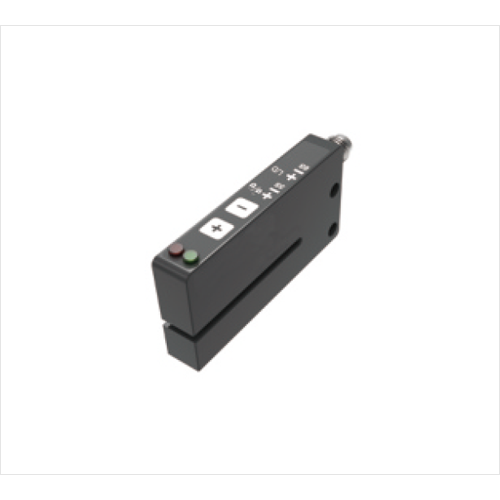
M5 inductive proximity switch: the "little steel gun" in precision automation
1. What is the concept of M5?
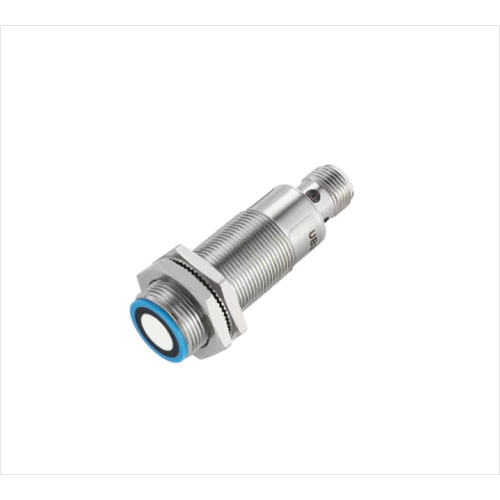
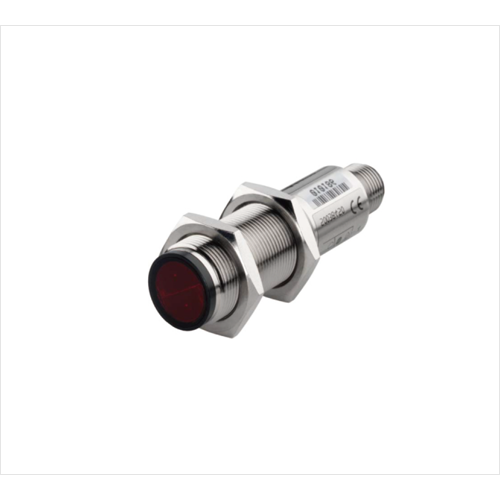
M5 refers to the thread specification of the sensor housing with a diameter of 5mm and a pitch of 0.5mm.
In the "size spectrum" of industrial proximity switches, its position is very subtle:
l Disadvantages : Slimer than the common M8 and M12, suitable for narrow spaces.
l More than inferior : stronger than the ultra-miniature φ3 and φ4, with longer detection distance, better anti-interference ability, and more convenient installation.
It usually has two "looks":
1. Flush type (shielded type) : The head can be completely screwed into the metal hole, flush with the installation surface, and is not easily damaged. It is suitable for embedded installation in compact spaces.
2. Non-flush type (non-shielded type) : The head protrudes and the sensing distance is farther, but there should be no metal around it, otherwise it will trigger by mistake.
2. Why choose M5? ——The Golden Section
Among many precision devices, the M5 is a well-thought-out choice:
1. Perfect balance of space and performance
l Pain points of φ3 : The detection distance is too short (usually only 0.8mm~1mm), the signal is easily lost with a slight vibration, and the thread is extremely thin and easy to slip.
l Pain point of M8 : M8 cannot fit into the narrow slots of some micro cylinders or precision molds.
l Advantages of M5 : The standard detection distance can reach 1.5mm (flush type), which is more than 50% farther than φ3; the thread strength is moderate, neither as delicate as φ3 nor as space-consuming as M8.
2. More suitable for high frequency vibration environment
Sensors are prone to loosening near pneumatic components, vibrating plates or high-speed spindles. The M5 thread provides better locking force than φ3, and combined with the lock nut, it can better resist high-frequency vibration.
3. The best partner for micro pneumatic components
Today"s miniature cylinders (such as cylinders with a bore of 6mm and 10mm) often come with M5 threaded mounting holes. At this time, using an M5 proximity switch to detect the piston position is a perfect match. No additional bracket is needed, just screw it on.
3. Working principle: old business, new realm
The M5 inductive proximity switch still uses the classic electromagnetic induction principle (eddy current effect): after power is applied, the induction head generates an alternating magnetic field → the metal object approaches → the metal surface generates eddy current → the oscillation energy attenuates → the circuit outputs a switching signal.
Although the principle remains the same, the coil technology of M5 is usually better than that of φ3, and the signal-to-noise ratio is higher. Therefore, when detecting small metal objects (such as screws, springs, thimbles), the stability is often better.
4. What do you think of the core parameters?
When purchasing an M5, these parameters must be understood:
1. Detection distance (Sn)
l Flush installation (shielded type) : The standard value is 1.5mm . This is the most common specification.
lNon -flush installation (non-shielded type) : up to about 2.5mm .
lNote : When detecting non-magnetic metals such as copper and aluminum, the actual distance will be discounted (about 60%~70% of the nominal value).
2. Output form
l NPN/PNP : Select according to the type of PLC card. European equipment mostly uses PNP, and Japanese equipment mostly uses NPN.
l NO/NC : Normally open or normally closed. It is recommended to use NC (normally closed) for safety circuits (such as cylinder origin detection), which will alarm when the circuit is broken, which is safer.
3. Outgoing line method
l Lead type : mostly 2 meters oil-resistant cable. M5 cables are usually thin (such as ⌀2.8mm~3.0mm) and need to be protected to avoid pulling.
lPlug -in type : Some high-end M5s will use M8-3-core or M8-4-core plug connections, which is convenient for maintenance and replacement, but the cost is slightly higher.
4. Protection level
Precision equipment often contains cutting fluid, oil or dust. Be sure to choose products with IP67 and above protection levels to ensure long-term stable operation.
5. Typical application scenarios
M5 can be found in various types of precision automation equipment:
1. Micro cylinder position detection : directly screwed on the cylinder body to detect the extension/retraction position of the piston rod.
2. Precision mold protection : In plastic molds or stamping molds, detect the reset of small ejector pins and sliders to prevent mold closing and compression.
3. 3C electronic assembly : Inspection of tiny parts (such as screws and shrapnel) on mobile phone and TWS headset production lines.
4. Semiconductor packaging and testing equipment : detecting the position of lead frames and chip carriers.
5. Medical analyzers : in biochemical analyzers and syringe pumps, detect the position of micropipette or valve core.
6. Guide to using and installing pit avoidance
Although the M5 is good, problems may arise if it is not installed properly:
1. Torque control : It is recommended that the tightening torque of M5 screws be controlled between 0.5 ~ 0.8 N·m . Tighten it all the way with your bare hands and then gently tighten it with a wrench. Don't use too much force to create a miracle , otherwise the thread will slip and the sensor will be scrapped.
2. Anti-collision design : If it is non-flush installation and the detection head protrudes, be sure to ensure that the moving mechanism does not directly hit the sensing head. Although the ceramic or plastic sensing surface of the M5 is wear-resistant, it cannot withstand hard impacts.
3. Cable stress relief : Because the cables are thin, 'stress relief' must be done when wiring (such as fixing them to immovable components with ties). Do not let the cables directly bear pulling force, and do not let the roots of the cables bend frequently.
4. Avoid 'group fights' : If multiple M5s need to be densely installed on the same metal plate, it is recommended to arrange them in a staggered manner or leave sufficient spacing (at least 10mm) to prevent mutual interference.
7. M5 vs φ3 vs M8: Quick selection comparison table
characteristic | φ3 proximity switch | M5 proximity switch | M8 proximity switch |
diameter | 3mm | 5mm | 8mm |
Standard detection distance | 0.8mm/1.0mm | 1.5mm | 1.5mm/2.0mm |
Thread strength | Weak (easy to slip teeth) | Medium (more durable) | 强 |
Applicable scenarios | Extremely narrow and ultra-precise | Precision, miniature pneumatic components | General automation |
Ease of installation | Difficult (need to be careful) | Easy (hand tightening + wrench) | 易 |
price | Higher (difficult to process) | Moderate | Cheap |
Conclusion
M5 inductive proximity switch is like the 'unsung hero' in the world of precision machinery. It is not as conspicuous as M12, nor as extreme as φ3, but it solves numerous practical problems in automation equipment with just the right size, just the right distance, and just the right cost .
In today"s pursuit of ultimate efficiency and precision, it is these seemingly inconspicuous "small screws" that support the backbone of intelligent manufacturing.