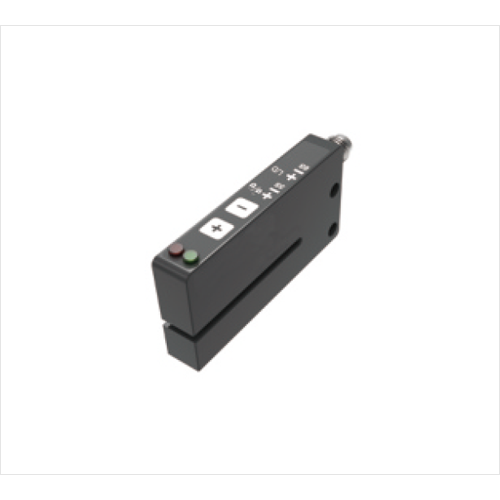
φ3 inductive proximity switch: "Metal Detection Expert" in a small body
In the precise corners of automated equipment, there is often no room for huge sensors. When engineers face narrow mold slots, tiny robot arm joints, or precision semiconductor fixtures, they need a component that can accurately sense metal and be "invisible" in the device.
At this time, the φ3 inductive proximity switch (hereinafter referred to as the φ3 proximity switch) becomes the best choice. It is the 'elf' in the industrial sensor family, guarding micron-level accuracy with its existence within millimeters.
Today, let"s talk about this "industrial tooth" with a diameter of only 3mm.
1. What is a φ3 inductive proximity switch?
As the name suggests, it has two core features:
1. Inductive type : It works based on the principle of electromagnetic induction and can only detect metal objects (iron, steel, copper, aluminum, etc.).
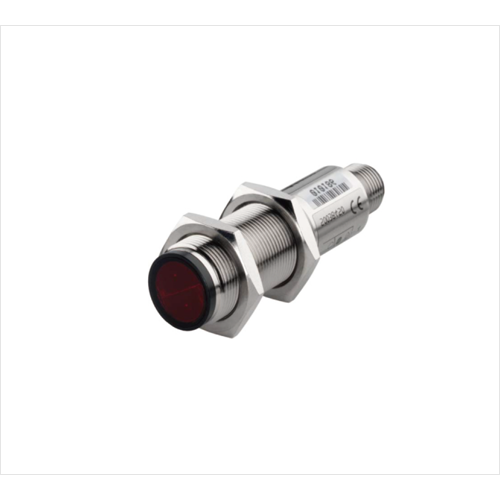
2. φ3 : refers to the shell diameter of 3mm. This is typically one of the smallest mass-produced threaded proximity switches currently available on the market.
Even though it is only so thin, the internal structure is complete: coil, oscillator, detection circuit and output circuit are integrated in a small metal shell. When a metal object approaches its sensing end face, the internal oscillating magnetic field changes, and the circuit immediately outputs a switching signal.
2. Why use such a small one?
You may ask, are ordinary M8 and M12 difficult to use? Why pursue the ultimate small?
The answer is: in order to adapt to the modern industry with high density integration.
1. Limited space : In precision molds, the distance between ejector pins may be only a few millimeters, which cannot accommodate larger sensors.
2. Lightweight requirement : At the end of a SCARA robot or a small pneumatic finger, every additional gram of weight will affect the movement inertia and speed. The ultra-light weight of φ3 hardly affects the movement performance.
3. Miniaturized detection : Detect whether the ejector pin with a diameter of 1mm has returned to its position, or whether the tiny spring is missing. Only the sensor with a small sensing head can get close to the target and obtain a stable detection signal.
3. Working principle: Eddy current effect
The operation of φ3 inductive proximity switch is based on electromagnetic induction and eddy current loss :
1. Oscillation : An alternating magnetic field is generated inside the sensor.
2. Induction : When a metal object enters the magnetic field, a closed current loop will be generated on the metal surface, which is eddy current .。
3. Attenuation : Eddy currents will consume the energy of the magnetic field, causing the oscillation amplitude to weaken or even stop.
4. Output : The detection circuit captures this energy change, drives the output circuit to flip the level, and tells the PLC: 'Hey, metal is coming!'
Special note : Different metals have different magnetic permeability and electrical conductivity, and the detection distance is also different. Generally, the detection distance of **steel (magnetic metal)** is the longest, and the detection distance of **brass and aluminum (non-magnetic metal)** will be shortened to 50%-70% of that of steel.
4. Interpretation of core parameters
When purchasing a φ3 proximity switch, the following parameters must be understood:
1. Detection distance (Sn)
This is the most important indicator. The standard detection distance of φ3 is usually 0.8mm or 1.0mm (shielded embedded type).
lMisunderstanding : Don’t try to let it detect objects a few millimeters away through the air. Due to its small size, its magnetic field range is very narrow and must be detected closely.
2. Shielding (Flush) and non-shielding (Non-flush)
l Shielded type (embedded type) : There is a shielding layer around the sensor head, which allows the sensor head to be installed flush into the metal opening without false alarms from surrounding metal fixtures. This is the most commonly used type.
l Non-shielded type (non-embedded type) : The sensing range is larger, but it cannot be close to other metals, otherwise it will interfere with the detection.
3. Output type
l NPN/PNP : Select according to the PLC input type.
l NO/NC : Normally open or normally closed. When detecting the position of the cylinder piston, normally closed (NC) is safer, and an alarm will occur if the line is disconnected.
4. Leading method
φ3 cables are usually very thin (such as ⌀2.0mm), which is to match the compact body. Common ones are:
l PVC oil-resistant cable : normal environment.
lTeflon high temperature resistant cable : near welding equipment.
lConnector type : convenient for plugging and unplugging for maintenance (but will increase a little volume).
5. Typical application scenarios
φ3 proximity switch is the darling of precision manufacturing:
1. Injection mold monitoring : Detect whether the small ejector pin and slider have returned to their original positions to prevent the mold from being crushed when closing.
2. Pneumatic finger positioning : installed next to the micro gripper to confirm whether tiny electronic components are captured.
3. Semiconductor equipment : On the wafer handling robot arm, the presence and position of silicon wafers are detected.
4. Glue dispensing machine/crystal bonding machine : detect whether the needle is blocked or broken.
5. Precision watches/medical equipment : detect the meshing status of tiny gears.
6. Guide to using pit avoidance
Because it is too small, φ3 needs to be used with extra care:
1. Violent installation is strictly prohibited : The φ3 shell is very thin, and the thread torque usually cannot exceed 0.3Nm (approximately tighten with your fingers), otherwise it will easily slip or break. It is recommended to use a wrench to hold the root of the thread (flat surface) for tightening.
2. Cable protection : The root of the outlet cable is the stress concentration point, and the bending radius cannot be too small. When wiring on moving parts, be sure to use bellows or drag chain protection to prevent fatigue breakage.
3. Anti-interference : Although it is a shielded type, if two φ3s are installed too close (less than 5mm), the magnetic fields may interfere with each other. It is recommended to install them in staggered positions.
4. Temperature effect : High temperature will cause the detection distance to drift. If used next to heating equipment, a high-temperature dedicated model is required.
7. Summary
φ3 inductive proximity switch is the epitome of the development of industrial sensors towards miniaturization and precision . It gives up the sense of strength of a large body and instead pursues ultimate sensitivity and adaptability.
In those invisible and precise corners, it is countless such tiny "sentinels" that support the manufacturing cornerstone of smartphones, chips, and precision instruments.
Next time you pick up a thin and light mobile phone, you may think that there may be dozens of φ3 proximity switches inside that have been involved in its manufacturing process.